Choosing the right career path after ICSE is one of the most important decisions a student will ever make, and the good news is that it does not always have to follow the traditional route of pure academics. With the rise of India’s skill economy, ICSE students now have access to a wide range of career options that are built on practical knowledge, hands-on training, and industry-relevant certifications. The demand for skilled professionals across sectors like technology, design, healthcare, and trades has never been higher.
Many students and parents are still not fully aware of how rewarding skill-based careers can be. This article covers the top skill-based career options available to ICSE students after Class 10 and Class 12, along with the courses, platforms, and entry points that make these paths accessible. Whether you want to work with computers, create content, build physical products, or manage a business, there is a skill-based path that fits your goals.
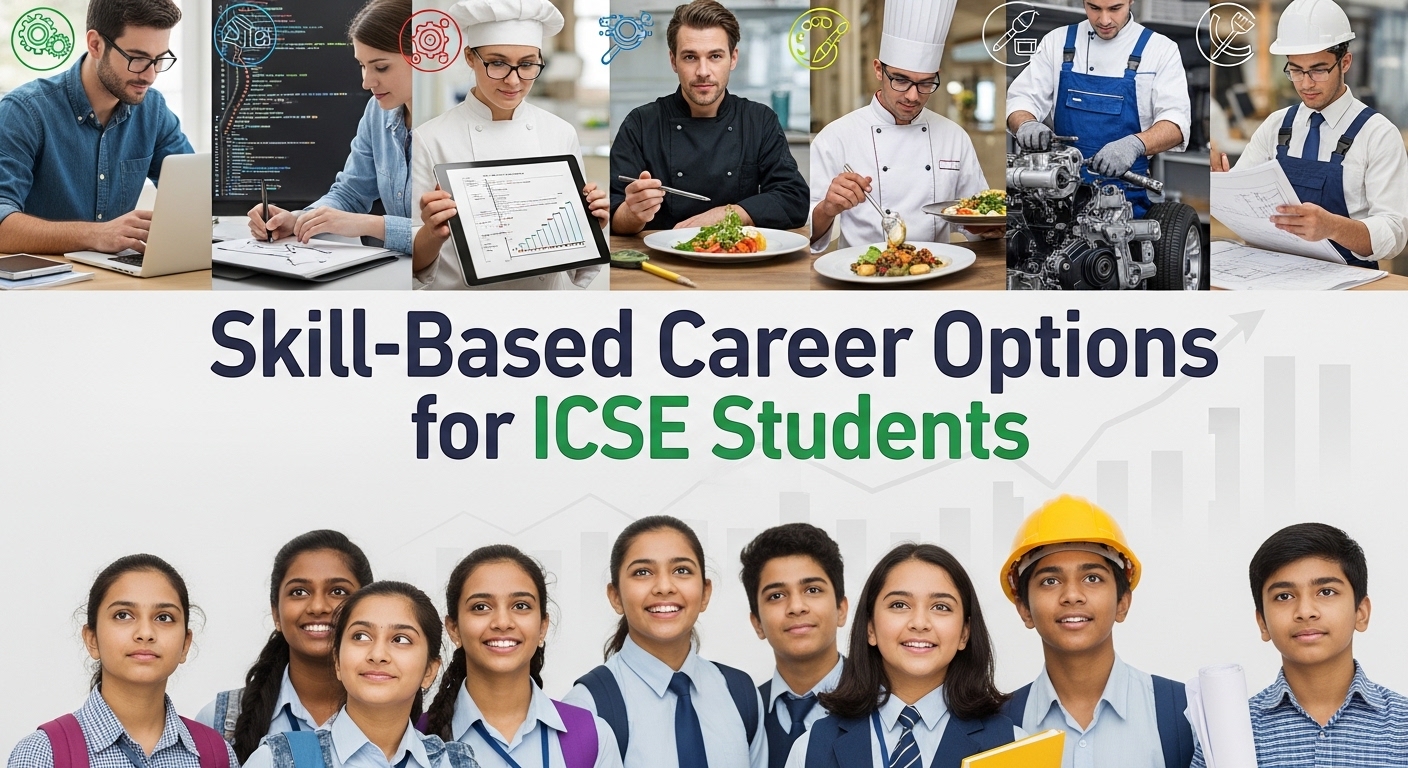
Skill-Based Career Options for ICSE Students
ICSE students are known for their strong English communication skills and analytical thinking, both of which give them a significant edge in skill-based careers. After completing Class 10 or Class 12 from CISCE, students can enrol in short-term certification courses, diploma programs, or vocational training institutes without waiting years for a traditional degree to kick in. Skill India, NSDC, NIELIT, and state-level polytechnic institutes offer structured programs that can fast-track entry into rewarding careers.
The key is identifying where your interest meets market demand. Some students enjoy working with technology, others prefer the creative arts, and many are drawn to healthcare or business management. Each of these areas has specific skill courses that are affordable, time-efficient, and widely recognised by employers. The overview below gives you a snapshot of what this article covers.
Overview: Skill-Based Careers for ICSE Students
| Post Type | Career Guidance / Skill-Based Education |
| Target Students | ICSE Class 10 and 12 Passouts |
| Focus Keyword | Skill-Based Career Options for ICSE Students |
| Relevant Boards | CISCE (Council for the Indian School Certificate Examinations) |
| Career Domains Covered | Technology, Creative Arts, Healthcare, Business, Vocational Trades |
| Skill Entry Routes | Short Courses, Diplomas, ITI, Polytechnic, Online Certifications |
| Key Bodies | NSDC, NIELIT, NIOS, Skill India Mission |
| Official References | skillindia.gov.in, nielit.gov.in, cisce.org |
Technology and IT Careers
Technology is one of the fastest-growing skill domains in India, and ICSE students are particularly well-positioned to enter it because of their science and mathematics background. Courses in web development, Python programming, data science, cybersecurity, and app development are available through platforms like NIELIT, Coursera, and NASSCOM Future Skills. A 3 to 6 month certified course can open doors to junior developer, data analyst, or IT support roles.
For students who want a structured offline route, ITI courses in computer hardware and networking are available after Class 10 and typically last one to two years. Polytechnic diplomas in Computer Science Engineering are another strong option after Class 10 and allow lateral entry into B.Tech programs later. Both paths offer strong job placement prospects and growing salary benchmarks.
Creative Arts and Design
Design is no longer limited to fine arts colleges. Graphic design, UI/UX design, animation, video editing, and fashion design are thriving industries that actively recruit candidates with portfolio-based skills. Platforms like Adobe, Canva, and various online academies offer beginner to advanced certifications that are recognised by studios, agencies, and startups across India.
ICSE students with a natural interest in visual communication can pursue diploma programs in graphic design or multimedia from NIFT, NID, or private design schools. Short online courses in tools like Figma, Adobe Illustrator, and Premiere Pro can build a strong portfolio within a few months. Freelancing is also a realistic early-career option for those who build strong practical skills in this domain.
Healthcare and Allied Medical Skills
Healthcare is one of the most stable sectors for skill-based careers. After Class 10, students can pursue courses like General Duty Assistant, Medical Lab Technician, Phlebotomist, or ECG Technician through NSDC-affiliated skill centres and hospital training programs. These courses range from 6 months to 1 year and lead to direct employment in hospitals, clinics, and diagnostic centres.
Students who complete Class 12 with Biology can look at paramedical diploma programs in radiology, physiotherapy assistance, optometry, and pharmacy. These paths require a smaller time investment compared to a full MBBS or BPharma degree but still offer strong career stability and scope for growth within the healthcare system.
Business, Finance, and Retail Management
Business skills are highly transferable and apply across almost every industry. ICSE students interested in commerce and management can pursue certifications in accounting software like Tally, GST filing, financial modelling, or digital marketing. These are practical skills with immediate employability, and even students from non-commerce backgrounds can pick them up quickly.
Retail management and customer service are growing sectors that actively hire trained youth. NSDC and Skill India run dedicated programs for retail associates, sales executives, and front office management roles. Students with strong communication skills, which ICSE students typically have, tend to do very well in these careers.
Vocational Trades and ITI Courses
Industrial Training Institutes offer some of the most practical skill-based career routes for students after Class 10. Trades like electrician, plumber, HVAC technician, welder, and fitter are in consistent demand across construction, manufacturing, and infrastructure sectors. ITI courses are typically one to two years long and combine classroom theory with workshop practice.
After completing an ITI course, students can appear for the All India Trade Test conducted by NCVT. Successful candidates receive a National Trade Certificate that is recognised by both Indian and international employers. Many ITI pass-outs also get absorbed through campus placements organized by industries and PSUs.
Beauty, Wellness, and Personal Care
The beauty and wellness industry in India is growing rapidly, with demand for trained professionals in skincare, haircare, makeup artistry, yoga instruction, and spa therapy. Courses in this space are offered by VLCC, CIDESCO-affiliated institutes, and skill development centres under the Beauty and Wellness Sector Skill Council. A 3 to 6 month diploma is typically enough to start working in salons, spas, or even run a home-based service.
This field also has strong self-employment potential. Many trained professionals build their own client base and run independent businesses within a year or two of completing their certification. For students who are creative and enjoy working with people, this is one of the most flexible and personally rewarding paths available.
How to Choose the Right Skill-Based Career
Choosing the right path starts with honest self-assessment. Think about what subjects or activities you enjoy the most, what kind of work environment suits you, and what salary range you expect in the short and long term. Talk to professionals already working in fields you are interested in and look at job portals to understand real-world hiring patterns.
Once you have narrowed down your interest, research the specific courses available in your city and online. Check whether the certification body is recognised by NSDC, AICTE, or a sector skill council. Enrolling in a free trial or short introductory module before committing to a full program is always a smart move. Hands-on practice matters far more than just having a certificate on paper.
Important Platforms and Skill Portals for ICSE Students
Several national platforms offer free or subsidised skill courses for Indian students. These include:
- Skill India Portal (skillindia.gov.in) — government-backed courses across 30+ sectors
- NIELIT (nielit.gov.in) — IT and electronics certifications including O Level, A Level, CCC
- NIOS (nios.ac.in) — vocational certificates with academic flexibility for Class 10 passouts
- SWAYAM (swayam.gov.in) — free online courses from IITs and central universities
- Coursera and edX — globally recognised certifications in technology, business, and design
- NSDC Training Partners — sector-specific skill centres in most Indian cities
Most of these platforms allow students to study at their own pace and earn credentials that are recognised by employers. Some even offer placement assistance and internship connections once a course is completed.
FAQs
Q1. Can ICSE students pursue skill-based careers after Class 10 without completing Class 12?
Yes. Many skill-based courses, including ITI trades, paramedical diplomas, and IT certifications, are open to candidates who have passed Class 10. Some courses even allow enrolment after Class 8. Students do not need to wait until Class 12 to start building practical skills.
Q2. Are skill-based certifications recognised by employers in India?
Certifications from NSDC-affiliated centres, NIELIT, NCVT, and other government-recognised bodies are widely accepted by Indian employers. Many private sector companies also accept portfolio-based evidence of skills, especially in IT, design, and digital marketing roles.
Q3. Which skill-based career has the highest earning potential for ICSE students?
Technology-based careers such as software development, data science, and cybersecurity tend to offer the highest salaries at the entry level. That said, earning potential also depends on specialisation, location, and consistent skill upgradation. Creative careers like UI/UX design also pay very well in urban job markets.
Q4. Is there financial assistance available for skill-based training?
Yes. The Pradhan Mantri Kaushal Vikas Yojana (PMKVY) provides free skill training to eligible candidates through government-empanelled training partners. Students can check the Skill India portal for currently active schemes and nearby training centres. Some state governments also run their own subsidised skill development programs.
Q5. Can skill-based qualifications be combined with a regular degree later?
Absolutely. Many skill-based routes allow lateral entry into degree programs. ITI holders can enter diploma programs directly in the second year at many polytechnics. Diploma holders can then enter the second year of B.Tech through lateral entry. This means skill training and academic qualifications are not mutually exclusive paths.
Q6. How long does it take to start earning after a skill-based course?
Most skill-based courses take 3 to 12 months to complete. After that, entry-level placement or freelance work can begin fairly quickly, especially in technology, healthcare support, beauty, and retail. Students who build a strong portfolio during training tend to find opportunities faster.
Important Links
| Important Links | Link |
| Skill India Mission Official Portal | Visit Here |
| Official Website — CISCE | Visit Here |
| Our Homepage | Visit Here |